
Latest Research on exercise for bone health and Osteoporosis (ROS) 2023
There is research evidence to demonstrate that certain types of exercise are more beneficial than other types to promote bone health, balance and care for our backs. However, it should realised that exercise in itself will not be enough to reduce the effects of low bone density to prevent fractures. If you are inactive you are likely to lose bone. However studies show that people who do regular resistance, strength and balance exercises, have lower rates of hip fracture for example, and have better muscular strength. Furthermore exercise will positively affect other health conditions we may have.
From recent studies, the best types of exercise are of 2 Types :
- Weight bearing Impact 2. Progressive Muscle Resistant Exercise
Impact exercise – When our foot hits the ground, forces or vibrations go up through our skeleton prompting a muscle contraction response leading to stress on the attaching bones which is what we want to stimulate bone cells for growth. Our skeleton respond to these impact forces. Impact exercise falls into 3 categories:
- Low Impact – walking, heel drops
- Moderate Impact – marching on the spot, mild jogging or running. This has a higher impact on our bones
- High impact – jumping or hopping and skipping introducing more variety and directions!
HOPS – Just 50 hops a day can benefit bone density!!
If you have knee issues you could take up Nordic Walking which also powers the arms and shoulder movements and has some evidence as being beneficial for bones.
Low impact is a good starting point and is suitable for everyone. Moderate impact is suitable for people without vertebral fractures. High impact creates increased strength in our bones and we can include more variety with changes of direction. Anyone for tennis? Dancing is good!
Type 2 – Progressive Muscle Resistance Exercise :
This makes muscles work harder against an external load ie weights, resistance bands, springs on the Reformer and kettle bells with the aim of improving muscle and bone strength. The amount of resistance should gradually increase over time as our bones and muscles adapt and become stronger. They require further load to improve. So you can start with resistance bands of various intensities from light to medium and strong, and weights ranging from 1 kg to 1 and a 1/2kg, 2 kg , 3kg etc. When you can repeat an exercise eg biceps, overhead press quite easily with 8-12 reps then you need to increase the weight of your dumbell by 1/2 to 1 kg and do the same exercise with less reps and less sets. These external loads can be included in 4 main groups of exercise:
The Hinge (with arms pull back)
The Squat
The Push (Over Head Press)
The Pull (Rows, Dead Lifts )
The hinge and squat will work to strengthen the lower part of the body ie legs, hips, lower back and glutes. The push and the pull trains muscles in the upper body ie chest, shoulders, arms and upper back.

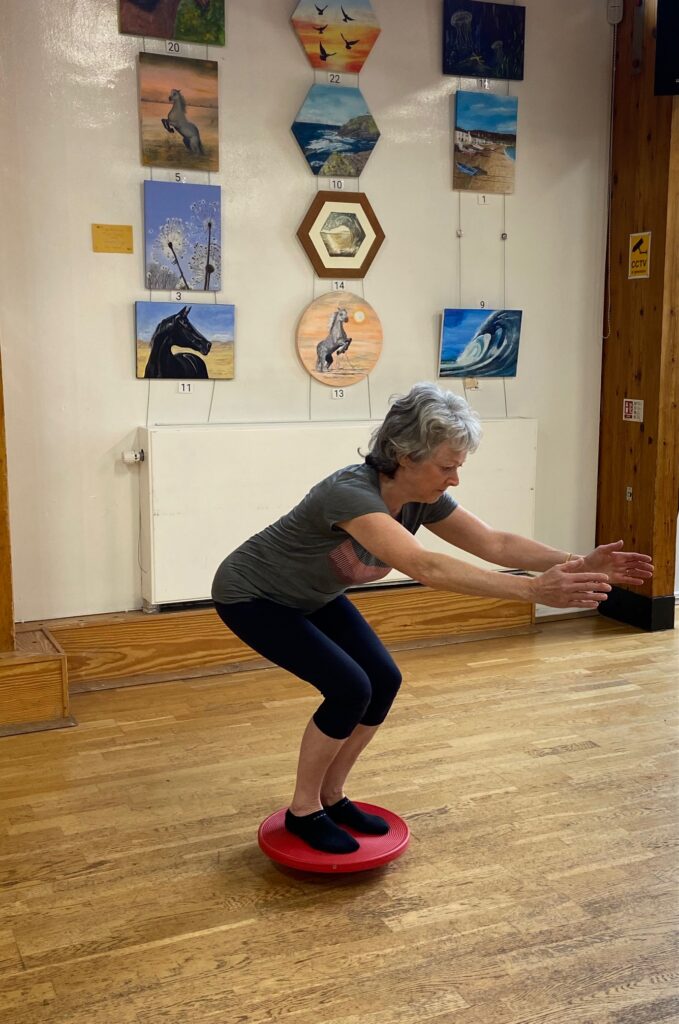

Additionally , to supplement the hinge, squat, push and pull, you should target your core stability and inner core muscles to strengthen your lower back and your anti gravity back postural muscles. Lunges both forward and reverse , overhead shoulder press, chest press help to strengthen the muscles around your joints and stimulate your bones at the same time. Keeping your legs strong is vital as you get older in addition to exercises like lunges and single leg squats to improve your balance to prevent falls.
Exercises on the Reformer carried out with good technique working multiple muscle groups is excellent. The springs provide graded resistance as progression. Which ever approach you take – we need to use a force to generate a bone response. Walking is unlikely to have much benefit but you can supplement this with muscle strengthening exercises.

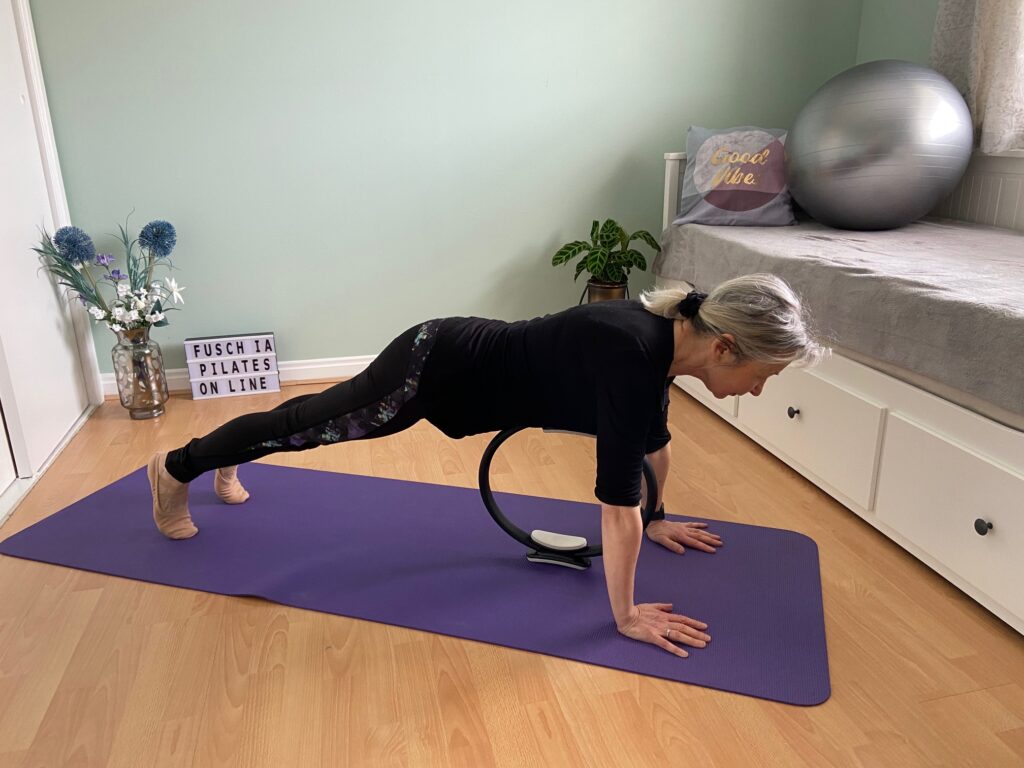

If using weights and resistance bands aim for 8 -12 reps and 3 sets using the maximum weight or band resistance, gradually increasing the load and number of sets. When you increase the load you can reduce the number of sets initially then gradually build up and safely manage the number of reps and sets.

(Reformer spring resistance )
In many of the exercises we do in class, particularly in ‘the hinge’ position we are working to strengthen our spinal extensor exercises which have a direct impact on bone building in the thoracic spine, which is a common fracture area.
Lets keep stronger for longer !!
