
REMS v DEXA


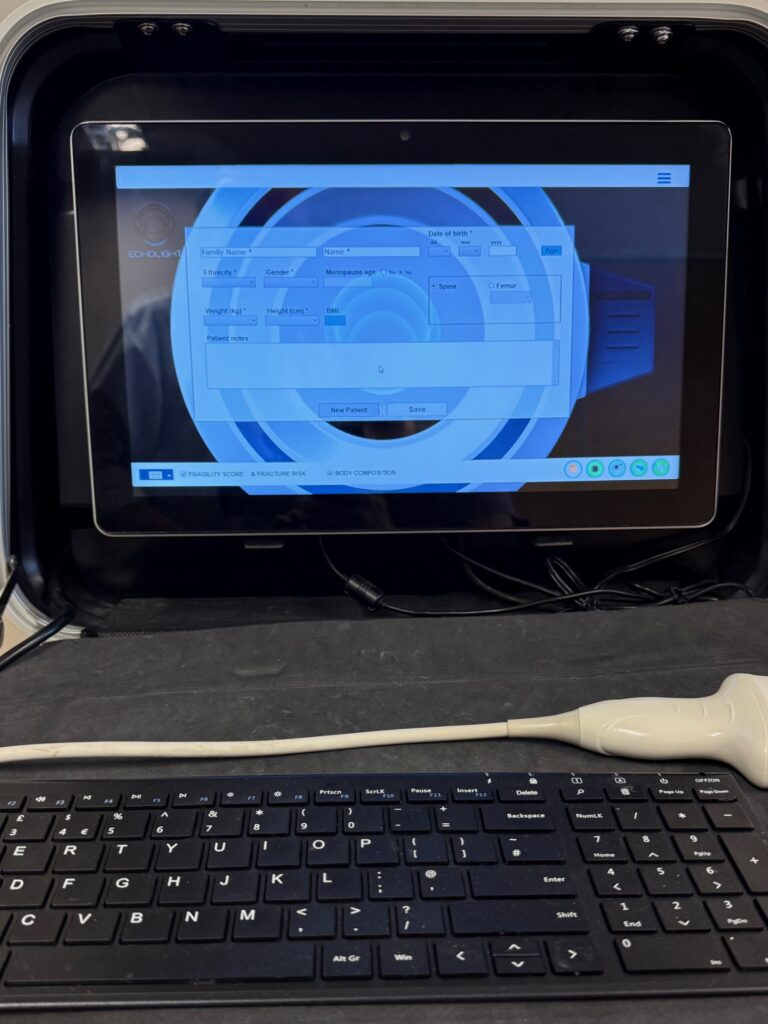
The REMS Echolight method—short for Radiofrequency Echographic Multi Spectrometry—is a cutting-edge, radiation-free technology that uses ultrasound to assess both bone density and bone quality. Unlike traditional bone scans, REMS evaluates not only mineral content but also the internal microarchitecture of bones, offering a more comprehensive picture of skeletal health. It provides a fragility score that reflects the structural integrity of bone tissue, which is crucial for predicting fracture risk. REMS scans are quick, non-invasive, and suitable for a wide range of patients, including pregnant women and those with spinal deformities or metal implants, making it a versatile tool for early diagnosis and monitoring of osteoporosis1
In contrast, the DEXA (Dual-Energy X-ray Absorptiometry) scan has long been considered the gold standard for measuring bone mineral density. It uses low-dose X-rays to quantify bone mass and generate T-scores that help diagnose osteoporosis and assess fracture risk. However, DEXA does not evaluate bone quality or microarchitecture, which can lead to limitations in accurately predicting fractures—especially in patients whose bone density appears normal but who still experience fragility fractures. Moreover, DEXA scans can be affected by factors like spinal arthritis or previous surgeries, which may skew results. REMS overcomes these limitations by offering a more precise and holistic view of bone health without the risks associated with ionizing radiation.
For more information https://www.pilatesforosteoporosis.co.uk/the-future-of-bone-health-understanding-bone-strength-and-bone-density-using-dexa-and-rems/
