Weighted vests for Osteoporosis. Can they boost bone health?

What are the benefits of wearing a weighted vest?
How do they work and who should wear them?
Who should not wear them?
Consider the weight of the vest? Does it fit well?
As the incidence of osteoporosis becomes more prevalent particularly in the older age group ,there has been a surge of interest in wearing weighted vests. Therefore I have decided to look into this to find out more information and find out some tips for wearing them.
Benefits to bone density
Adding weight to your body during exercise can help to stimulate bone formation and decrease bone resorption ie bone breakdown. Muscles pull on bones. Stronger muscles, stronger bones.
Wearing a weighted vest is a form of resistance training. The added weight they provide makes your muscles work harder. It also makes the activities you do a little more challenging so you you find that your body works harder. The added resistance from the vest challenges your muscles leading to improved strength and stability particularly when doing squats, lunges, planks and push ups. Wearing one you are likely to burn more calories, and improve your posture and hopefully strengthen your core and glute muscles.
One research study carried out involved a small group of 18 post menopausal women who took part in a 5 year exercise programme, and exercised 32 weeks out of every year year, 3 times a week . They all wore a weighted vest. The exercises included jumping whilst wearing a weighted vest. Researches found that bone density in the femur neck (where the thigh bone joins the hip bone) was maintained or slightly increased whilst the control groupfor the study experienced a decrease in bone mineral density. I am unable to source the link to this study but it is cited in (410) Weighted Vests for Osteoporosis: Build Stronger Bones Safely! – YouTube
Wearing a weighted vest is NOT suitable for everyone !
However, wearing a weighted vest may not be appropriate for everyone. If your spine is already kaiphotic ie excessively curved in your mid to upper spine you do not want to exacerbate your curvature even more as this puts more pressure on your internal organs within the thoracic cavity. Instead you are best to use resistance bands like mini loops or flexi bands to help maintain your strength and improve your posture.
Avoid using them if you have compression or hairline fractures affecting the spine. Other contraindications include spinal conditions like stenosis and spondylosis where you have narrowing of the vertebral foramen or where the spaces between the vertebrae become narrow impinging on the nerves leaving the spine. You should also avoid wearing one if you have a herniated disc. If you have a scoliotic spine, wearing one may not be appropriate as it may aggravate your condition.
It may not be suitable for people with back or neck problems and those with knee, hip or ankle issues as extra weight puts stress on joints.
It is always best to consult your health professional first to ensure it is safe for you to use a weighted vest especially if you have any of the underlying conditions.
What should you look for when buying one?
Look for a vest that has adjustable weights so you can incrementally add weights to stimulate bone growth. It is best to start off with a lighter weight. One recommendation is that you start with 5% of your total body weight and gradually increase this weight over time but never exceeding 20% of your body weight. It is important to gradually increase the weight and intensity to give muscles and bones time to adapt.
When should you wear it and how often?
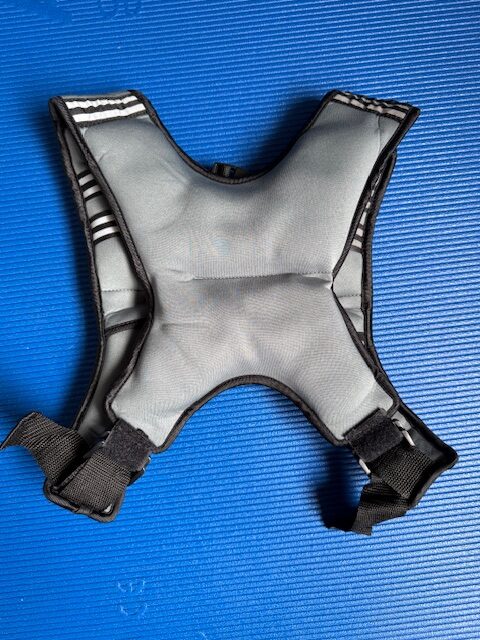
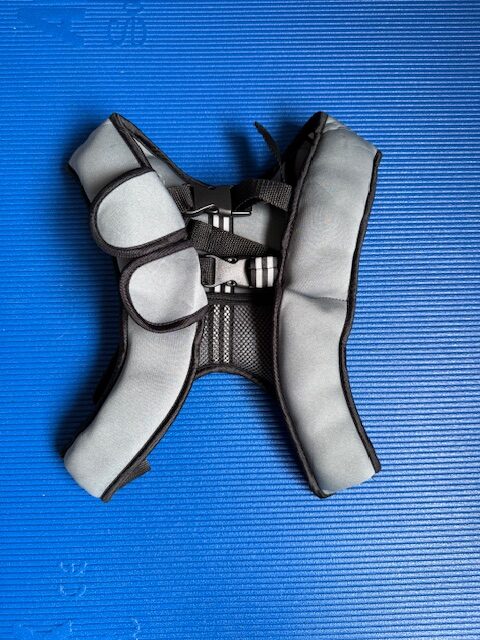
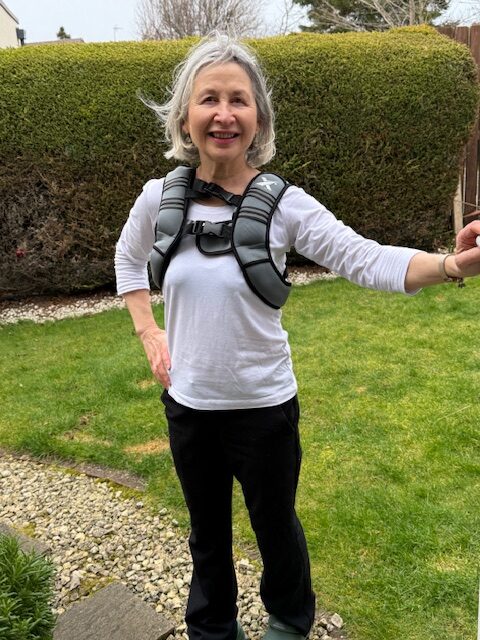
Advisably 2-3 times a week for a walk or whilst doing an exercise session. Always maintain good form and technique during exercises to prevent injury and maximise the benefits. Weighted vests are not designed to be worn all the time or for long periods. You should source one that has extra padding around the shoulders and ensure the weight is evenly distributed front and back to avoid imbalance. Consider the material it is made from – is it washable, breathable? and whether it can be easily adjusted to fit comfortably and snugly so it fits well. You will notice from my two photos that the weight is concentrated higher up on the thoracic spine and shoulders. This is to reduce unecessary strain in your lower back.
Only wear the vest if you have reasonably good posture. Monitor your body as you wear it. How does it feel? If you feel any discomfort, do not wear it. There are many different styles and variations for you to try.
Finally, wearing a well fitted and appropriate weighted vest can be a really good way to promote bone health. However, it is not suitable for everyone with osteoporosis. Its always best to consult a health professional before incorporating a weighted vest into your routine.